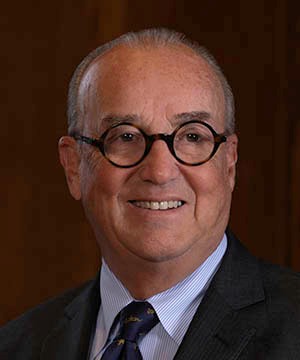
Post-retirement financial planning can require a shift in mindset-from pursuit of growth to the delivery of a steady stream of income while preserving capital
PHILADELPHIA, PA, UNITED STATES, June 25, 2026 /EINPresswire.com/ — Approximately 20% of the American population is over the age of 65. That the traditional retirement age is 65, may be an outdated concept, many Americans at or near that age start to think about their senior years and how their savings and investments will help support them, with or without additional income. Planning for post-retirement can often require a significant shift in one’s financial mindset – transitioning investment thinking from the pursuit of growth to delivering a steady stream of income while preserving capital.
Prioritizing growth can be a good thing, especially for investors who are still under the age of 65. However, most seniors will require assistance in shifting their decades-long mindset prioritizing growth, to the practical needs and strategies at hand – now having to create a plan designed to transition financial management from growth toward producing the income needed to pay monthly expenses.
For seniors, some income withdrawal is mandated by law. For example, having either a 401(k) or a traditional IRA, one must take a required minimum distribution (RMD) starting at age 72 or 73, depending on the year you were born. In addition to that required minimum distribution, one may want to generate additional income from savings to help augment social security income. According to James W. Graves, CFP® is a nationally recognized investment thought leader, investment advisor and founder of Joppa Mill Advisors, “Aside from providing an inheritance to the next generation, the question must be asked – why do people save? Top reasons include the accumulation of funds for emergencies and to cover expenses and lifestyle during senior years. Although the mindset for saving can be intuitive, transitioning one’s thinking from accumulating to now withdrawing from savings can require some counterintuitive mental adjustment.”
Graves has developed a list of key initiatives that can enhance the process of optimizing income while transitioning from a growth to an income strategy. It includes:
1) Start with a completely new plan.
Income investing is a different paradigm from growth. Create a completely new, post-retirement plan with your advisor based upon your needs, fears and expectations. Communication is important. Make sure that you understand the plan and the logic behind it. It will go a long way towards relieving stress and anxiety.
2) Rebalance your portfolio for income stream stability.
Transition the portfolio to investments that will be more effective in producing a consistent income stream – including a larger percentage of dividend stocks, bonds, blue chips, ETF’s and others. Tilt the portfolio balance away from potentially more volatility and risk and towards stability and dependability.
3) Remove emotion from decision-making.
Work your long-term plan. Don’t let volatility and other short-term influences, good or bad, trigger emotions that lead to your making potentially costly short-term adjustments.
4) Anticipate the unexpected.
Over the long-term, contingencies happen. Don’t let the unexpected derail your long-term plan. Build in strategies to handle volatility, unexpected inflation, government actions and other factors.
5) Time withdrawals to minimize taxes.
Certain investment strategies can potentially trigger higher taxes on income, especially if one must sell equity at an inopportune time. Optimize withdrawals to minimize taxes because reducing taxes ultimately adds to income.
6) Shift goals from achieving growth to preserving capital.
Although younger investors can focus on growing capital by using riskier growth strategies, post-retirement investors need to transition to a strategy designed to preserve capital. Preserving capital requires a more conservative approach, but it can provide a consistent, predictable income stream which will be more effective in covering one’s monthly expenses during one’s senior years.
7) Maintain diversity in the portfolio to offset market volatility.
By having a number of different types of investment options in one’s portfolio, one can often offset downturns in one area against upturns in another, enhancing stability. Portfolio diversity can protect against volatility.
8) Review your lifestyle and examine ways to cut back on expenses.
Cutting back on expenses can often be easier than creating growth. As one approaches retirement, it’s valuable to review where the money goes and examine ways to cut back on outgo. One example is clothing – if one doesn’t go into the office anymore, spending as much money on updating one’s wardrobe may not be necessary.
Said Graves, “Transitioning investment strategies from growth to income can potentially involve some counterintuitive decisions. But it’s not all or nothing. When a portfolio is properly managed, even an income-focused strategy can achieve both growth and income.”
—–
ABOUT JAMES GRAVES, CFP®
James W. Graves, CFP® is a nationally recognized investment thought leader, investment advisor and Founder of Joppa Mill Advisors. He began his career at Bankers Trust Company as a commercial lending officer before transitioning to BTCo.’s trading desk where he was an institutional bond salesman and subsequently underwrote and traded Federal Agency bonds. Decamping from New York, Graves has held senior positions with Wilmington Trust Company, T. Rowe Price, Acadian Asset Management, Morgan Stanley and Merrill Lynch. In addition to his holding the preeminent industry designation, Certified Financial Planner®, he holds degrees from Trinity College in Hartford CT (B.A. English/Political Science) and New York University Stern School of Business (M.B.A.).
Investment advice is offered through Wealthcare Advisory Partners LLC dba Joppa Mill Advisors LTD. Wealthcare Advisory Partners LLC is a registered investment advisor with the U.S. Securities and Exchange Commission.
James W. Graves, CFP®
Joppa Mill Advisors LTD.
1414 South Penn Sq. 14C
Philadelphia, PA 19102
Phone: (610) 971-6296
Email: james@joppamilladvisors.com
Website: https://joppamilladvisors.com
Linkedin: https://linkedin.com/in/jameswgraves
X.com: https://x.com/JamesWGraves # #
Leo Levinson
GroupLevinson
+1 267-664-6161
email us here
Visit us on social media:
LinkedIn
X
Legal Disclaimer:
EIN Presswire provides this news content “as is” without warranty of any kind. We do not accept any responsibility or liability
for the accuracy, content, images, videos, licenses, completeness, legality, or reliability of the information contained in this
article. If you have any complaints or copyright issues related to this article, kindly contact the author above.

Media gallery