Comparing Foundation Crack Repair Options: What They Cost and Which Solutions Last the Longest
Macedonia, United States – March 9, 2026 / StablWall /
Once a homeowner realizes a foundation crack may need repair, the next question is almost always the same:
“What are my options, and how much is this going to cost me?”
Unfortunately, foundation repair is an industry where vague answers and oversimplified fixes can create confusion, mistrust, and hesitation. This guide breaks down the most common foundation crack repair methods, what they’re designed to do, and how homeowners can think about cost without focusing on the wrong numbers.
Why There’s No Single “Best” Foundation Crack Repair
Foundation cracks don’t all form for the same reason, so repairing them with the same solution doesn’t make sense.
 Some cracks are the result of:
- Normal concrete shrinkage
- Minor settlement that has already stopped
- Water pressure forcing moisture through the wall
Others are caused by:
- Ongoing lateral soil pressure
- Structural wall movement
- Long-term foundation instability
The right repair method depends on whether the crack is a symptom or the problem itself.
Crack Sealing and Injection Repairs
What this method does
Crack injection involves filling the crack with epoxy or polyurethane material to seal it and prevent water intrusion.
When it’s typically used
- Narrow, vertical cracks
- Non-structural cracks
- Leaks caused by water penetration rather than movement
Pros
- Relatively quick process
- Less invasive
- Effective for stopping water leaks
Limitations
- Does not stop wall movement
- Not designed for structural reinforcement
- Cracks can reappear if pressure continues
Crack injection works well when the foundation itself is stable and the goal is sealing, not reinforcement.
Carbon Fiber Crack Repair Systems
What this method does
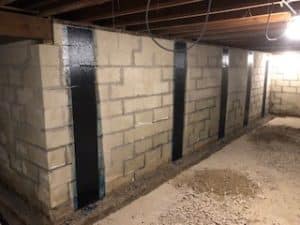
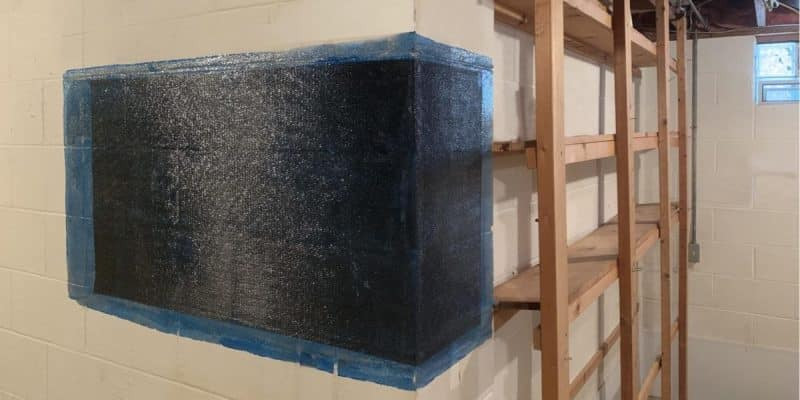
Carbon fiber reinforcement systems are designed to stabilize foundation walls and prevent further movement. The carbon fiber material is bonded to the wall to add tensile strength where concrete is weakest.
When it’s typically used
- Cracks caused by lateral pressure
- Early-stage wall movement
- Horizontal or diagonal cracking
- Situations where excavation is not desired
Pros
- Extremely strong relative to thickness
- Non-invasive installation
- Does not reduce basement space
- Designed for long-term stabilization
Limitations
- Not intended to straighten severely bowed walls
- Must be professionally installed for proper performance
Carbon fiber is often chosen by homeowners who want a permanent stabilization solution without major disruption.
Steel Beam and Wall Bracing Systems
What this method does
Steel beams or braces are installed vertically against the foundation wall to counteract inward pressure and provide reinforcement.
When it’s typically used
- Walls showing noticeable bowing
- Advanced horizontal cracking
- Situations requiring strong mechanical support
Pros
- High structural strength
- Effective for significant wall movement
- Proven long-term solution
Limitations
- Reduces usable basement space
- More visually intrusive
- May require floor or footing modifications
Steel systems are effective, but some homeowners prefer less intrusive options when possible.
Wall Anchors and Tieback Systems
What this method does
Wall anchors use rods or cables extending into stable soil outside the home to pull foundation walls back toward their original position.
When it’s typically used
- Significant inward wall movement
- Severe horizontal cracking
- Cases where exterior access is available
Pros
- Can correct wall alignment over time
- Addresses external soil pressure directly
- Strong structural support
Limitations
- Requires excavation
- Installation is more disruptive
- Depends on exterior soil conditions
This method is often chosen when corrective movement, not just stabilization, is required.
Foundation Stabilization Beyond Crack Repair
In some cases, cracks are not the core issue. They’re a symptom of foundation settlement or load imbalance.
When this happens, crack repair alone won’t solve the problem. Stabilization solutions may be recommended to:
- Transfer weight to stable soil layers
- Prevent future settlement
- Protect the structure as a whole
This approach focuses on root causes, not surface damage.
Understanding Foundation Crack Repair Costs
 Homeowners often focus on price, but cost without context can be misleading.
Repair costs vary based on:
- Type of crack
- Severity and location
- Repair method selected
- Accessibility
- Whether stabilization is required
Lower-cost solutions typically address symptoms. Higher-cost solutions often address structural forces and long-term stability.
The most expensive repair is the one that has to be done twice.
Why “Cheapest” Isn’t Always the Smartest Choice
A low-cost fix may stop a leak today but fail to stop movement tomorrow.
Homeowners who choose repair methods that match the underlying cause often report:
- Fewer repeat issues
- Lower long-term expenses
- Greater peace of mind
- Improved resale confidence
Choosing the right repair is less about minimizing upfront cost and more about avoiding future regret.
Questions Homeowners Commonly Ask
How long do foundation crack repairs last?
When the correct method is used, many repairs are designed to last for the life of the home.
Can foundation cracks be fixed from the inside?
Yes. Many modern stabilization and reinforcement systems are installed internally, avoiding excavation.
Is foundation crack repair disruptive?
Most professional repairs are completed in one day or less with minimal disruption.
Will repairs affect my home’s value?
Properly repaired foundations often protect or improve resale value by removing uncertainty for buyers.
What Homeowners Say After Choosing the Right Repair
Homeowners frequently describe a sense of relief after repair, especially when the solution addresses the cause rather than the appearance.
Common reflections include:
- “I finally stopped worrying every time it rained.”
- “The repair made sense once it was explained.”
- “I wish I had understood the options sooner.”
Clarity builds confidence, even when repairs are necessary.
Choosing a Repair Partner You Can Trust
Foundation crack repair isn’t just about materials or equipment. It’s about diagnosis.
Companies like Stablwall focus on identifying why cracks form and recommending solutions designed to stabilize homes long-term, not just cover visible damage.
The Bottom Line for Homeowners
Foundation crack repair isn’t about finding a quick fix. It’s about matching the right solution to the right problem.
Understanding your options, their purpose, and their long-term impact allows you to make informed decisions without fear or pressure.
A well-chosen repair doesn’t just fix a crack. It restores confidence in your home.
Contact Information:
StablWall
349 Highland Rd
Macedonia, OH 44056
United States
Nick DiCello
(866) 782-5955
https://stablwall.com/