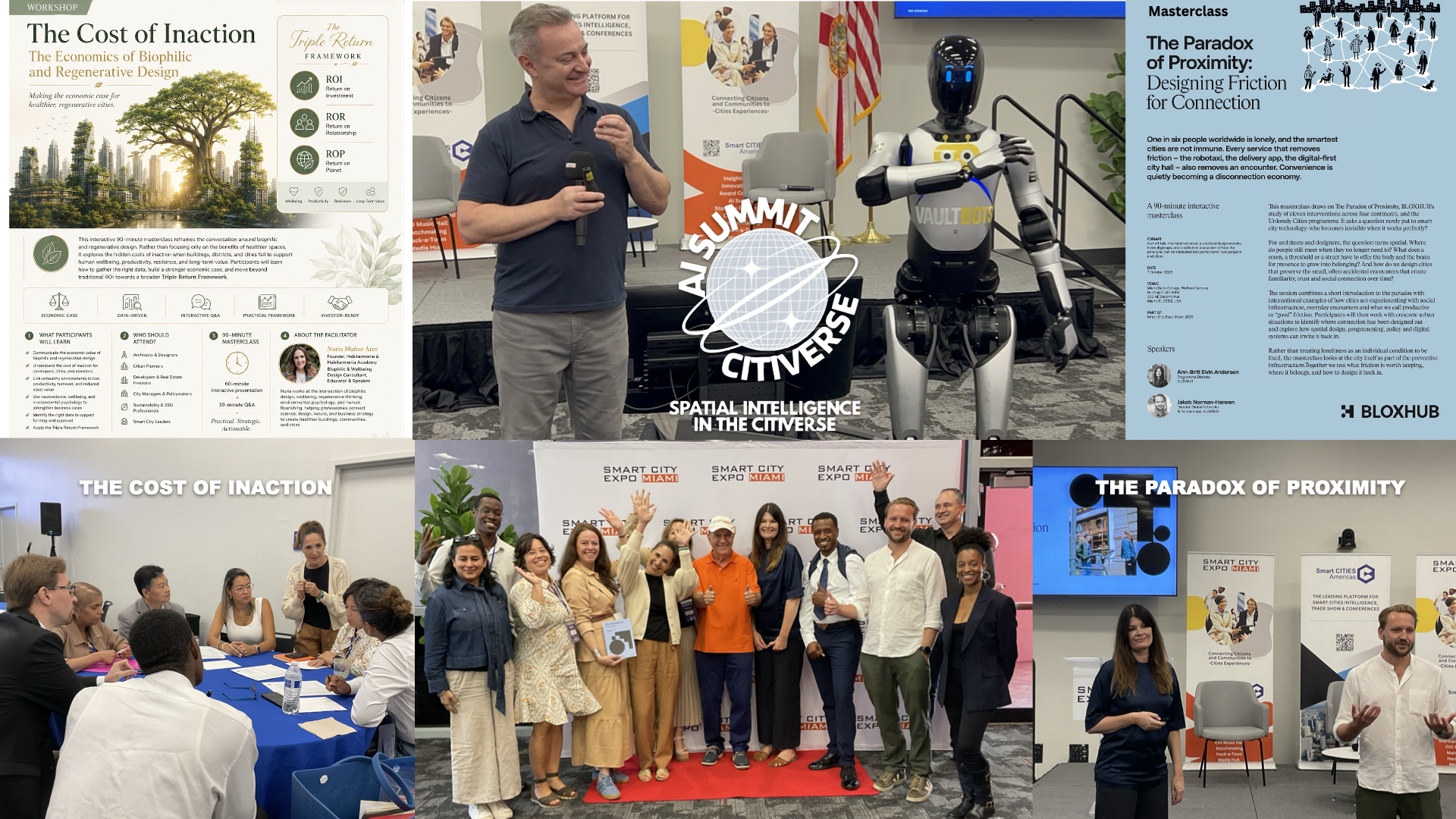
October 7 deep dives explored the economics of regenerative design, the conditions for human connection, and spatial intelligence in the Citiverse.
MIAMI, FL, UNITED STATES, October 15, 2026 /EINPresswire.com/ — The conversations at Smart City Expo Miami 2026 did not end with the main conference. On October 7, a dedicated program of side events created space for a different kind of exchange: focused learning, closer collaboration, and deeper exploration of the ideas shaping a regenerative urban future.
Featuring an in-depth workshop, a masterclass, and an AI Summit, the program extended the event’s theme, “Urban Intelligence for a Regenerative Future,” into three complementary areas: the economic dimension of design, the social experience of proximity, and the emerging possibilities of spatial intelligence.
The purpose was to move from inspiration toward a blueprint for action. Led by international experts, these sessions were designed to help participants examine critical topics at a more granular level and connect with peers working through similar challenges.
The Economics of Designing for Life
The morning began with “The Economics of Biophilic and Regenerative Design,” a workshop led by Nuria Muñoz Arce of Habitarmonia, based in Valencia, Spain.
The workshop placed the economic dimension of biophilic and regenerative design at the center of the conversation. Its focus brought an important perspective to the broader conference theme: moving toward a regenerative future requires attention not only to design ambitions, but also to the economic thinking that supports their implementation.
For an event connecting urban innovation with human experience, this was a meaningful starting point. The workshop invited participants to look beyond the appeal of a design concept and consider the practical case for bringing it into projects and places.
It also established the tone for the day: focused sessions that connect big-picture aspirations with the questions professionals face when moving toward implementation.
Proximity Is Not the Same as Connection
Ann-Britt Andersen and Jakob Norman-Hansen of BLOXHUB in Copenhagen led the masterclass “The Paradox of Proximity: Designing Friction for Connection.”
The session extended a theme introduced during the conference: being physically close does not necessarily mean feeling socially connected.
Its focus offered a compelling complement to the morning’s workshop. While regenerative design asks how places can contribute to a better future, the paradox of proximity asks how those places can support meaningful encounters among the people who use them.
The masterclass format provided a dedicated setting for a deeper exploration of that challenge. Rather than treating connection as an automatic outcome of shared space, its framing placed attention on the intentional design of conditions for interaction.
“Within the October 7 program, the session reinforced the importance of keeping human relationships at the center of urban intelligence. The quality of a city is not only a question of how its systems function, but also of how people experience life together.” Bernardo Scheinkman, Founder & CEO, Smart Cities Americas.
Spatial Intelligence Enters the Conversation
The afternoon shifted to the digital dimension of urban transformation with the AI Summit, “Spatial Intelligence in the Citiverse.”
Bernardo Scheinkman, CEO of Smart Cities Americas, opened the summit with remarks introducing the Citiverse concept in the United States. This placed the discussion within the organization’s continuing effort to connect South Florida’s urban innovation ecosystem with international perspectives.
A welcome video from Cristina Bueti, Counsellor on Citiverse at the International Telecommunication Union (ITU) in Geneva, brought an international institutional voice to the program.
Dr. Jonathan Reichental, CEO of Human Future in Silicon Valley, delivered the keynote, completing a lineup that connected local convening leadership, global engagement, and expertise in the future of urban technology.
The summit’s focus on spatial intelligence added another layer to the day’s exploration of urban intelligence. Alongside the workshop’s economic lens and the masterclass’s social lens, it created a dedicated space to examine an emerging digital frontier.
Three Deep Dives, One Shared Direction
Together, the October 7 side events reflected the breadth of Smart City Expo Miami’s regenerative vision.
The workshop focused on the economics of design. The masterclass explored the conditions for connection. The AI Summit brought spatial intelligence and the Citiverse into the conversation.
Their value lay in creating room to go deeper—beyond a conference presentation and into a focused setting where participants could engage with experts and fellow professionals.
That was the promise of the day: leave Miami with more than new ideas. Leave with sharper questions, stronger connections, and a clearer direction for the work ahead.
Bernardo Scheinkman
Smart Cities Americas
Visit us on social media:
LinkedIn
Instagram
X
Legal Disclaimer:
EIN Presswire provides this news content “as is” without warranty of any kind. We do not accept any responsibility or liability
for the accuracy, content, images, videos, licenses, completeness, legality, or reliability of the information contained in this
article. If you have any complaints or copyright issues related to this article, kindly contact the author above.

Media gallery