
Key Takeaways
- Executive exhaustion is the new norm: Traditional corporate retreats leave teams more drained than inspired, with over-programmed schedules killing creative thinking
- Disconnected leadership costs real money: More than 50% of senior business leaders experience loneliness and isolation, with 61% of those CEOs who experience loneliness believing it directly hinders their performance
- Nature-based environments unlock strategic thinking: Immersion in natural settings reduces stress and improves problem-solving capabilities better than conference rooms
- Skilled facilitation matters more than fancy amenities: Creating psychological safety for difficult conversations requires expertise, not just premium locations
- Self-directed experiences beat rigid programming: Teams need space to think, not another presentation deck
Why Your Executive Team Returns More Exhausted Than Inspired
Something’s broken in the corporate retreat formula. Executive teams invest thousands in off-site experiences, block calendars for strategic planning sessions, and return to the office more depleted than when they left. The irony cuts deep: events designed to energize leadership teams are systematically draining them.
The pattern repeats across industries. Teams arrive at retreats carrying operational stress, decision fatigue, and the weight of unresolved conflicts. Instead of addressing these underlying issues, most retreats pile on more information, tighter schedules, and back-to-back sessions. By day three, executives check out mentally while going through the motions of engagement.
According to Lindy Dewey, founder of SpiritWorks Trilogy, the problem runs deeper than poor agenda planning. “People don’t necessarily need more information,” Dewey explains. “Most people need the right environment. When experienced, the environment allows clarity to crystallize naturally.”
The Hidden Cost of Disconnected Leadership
1. Financial Impact: Leadership Isolation Hurts Performance
Leadership isolation isn’t just an emotional issue—it’s a business crisis with measurable financial consequences. When senior executives become disconnected from their teams and each other, the ripple effects cascade through entire organizations. Disconnected teams produce decreased productivity, stifled innovation, and increased employee turnover.
The statistics reveal the scope of the problem. A 2019 survey found that 61% of Americans reported feeling lonely, with senior leadership experiencing some of the highest rates of professional isolation at work. This disconnection directly impacts decision-making quality, strategic alignment, and the ability to execute complex initiatives that require coordinated leadership effort.
2. The Strategy Breakdown: When Teams Can’t Execute
Disconnected executive teams struggle with what industry experts call the “strategy-execution gap.” Beautiful strategic plans fail not because of flawed thinking, but because leadership teams lack the authentic connection needed to navigate implementation challenges together. Without genuine dialogue and shared understanding, strategies become documents rather than living roadmaps.
The breakdown typically happens during the messy middle of execution, when unforeseen obstacles require real-time collaboration and creative problem-solving. Teams that haven’t developed authentic working relationships default to silos, finger-pointing, and political maneuvering instead of unified problem-solving.
What Traditional Corporate Retreats Get Wrong
Over-Programming Kills Creative Thinking
The biggest mistake in corporate retreat planning is confusing busyness with productivity. Jam-packed schedules with back-to-back sessions, continuous strategy workshops, and information-heavy presentations create the opposite of the reflective space teams need for breakthrough thinking. The human brain requires downtime to process complex information and generate creative solutions.
When every minute is scheduled, teams operate in reactive mode rather than strategic mode. The constant stimulation prevents the kind of deep thinking that produces genuine insights and approaches to persistent challenges.
Presentation-Heavy Formats Prevent Real Dialogue
Most corporate retreats default to presentation formats that reinforce existing power dynamics and prevent authentic exchange. When leadership teams spend their time consuming information rather than engaging in meaningful dialogue, they miss opportunities to address underlying tensions and build genuine understanding.
Real strategic breakthroughs happen through conversation, not consumption. Teams need structured opportunities to examine different perspectives, challenge assumptions, and work through complex problems together rather than listening to another slide deck.
One-Size-Fits-All Venues Lack Authentic Connection
Generic conference centers and hotel meeting rooms create sterile environments that reinforce corporate personas rather than encouraging authentic human connection. These spaces signal “business as usual” when teams need “breakthrough as possible.” The environment shapes behavior more than most leaders realize.
Venues that lack character, natural elements, or distinctive features fail to disrupt routine patterns of interaction. Teams fall into the same communication patterns they use in the office, limiting their ability to see problems from fresh perspectives or generate novel solutions.
How Nature-Based Environments Transform Team Dynamics
Cognitive Benefits: Better Problem-Solving and Focus
Research consistently demonstrates that natural environments improve cognitive function, boost creative problem-solving, and strengthen focus in ways that traditional meeting spaces cannot replicate. When executive teams immerse themselves in natural settings, their brains shift from the constant vigilance of urban environments to a more relaxed, expansive state conducive to strategic thinking.
Natural environments disrupt routine patterns and encourage novel perspectives. The change in visual stimulation, air quality, and sensory input creates conditions where teams can see familiar problems through fresh lenses and generate approaches they wouldn’t discover in conventional conference rooms.
Stress Reduction Creates Space for Strategic Thinking
Nature-based retreats provide genuine stress reduction that goes beyond temporary relaxation. When cortisol levels decrease and nervous systems regulate, executive teams access higher-order thinking capabilities that remain blocked under chronic stress. This physiological shift is necessary for the kind of long-term strategic thinking that drives organizational success.
The stress reduction also enables more authentic interpersonal connection. When people feel genuinely relaxed, they’re more likely to share real concerns, admit uncertainties, and engage in the vulnerable conversations that build trust and alignment among leadership teams.
The SpiritWorks Sanctuary Approach
1. Self-Directed Experience Over Rigid Programming
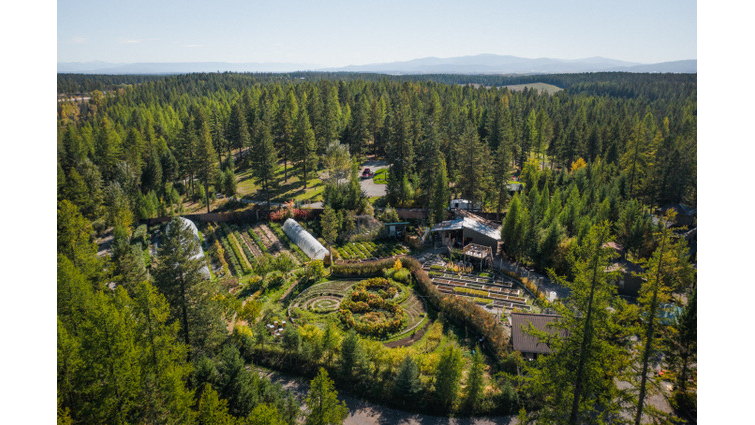
SpiritWorks Sanctuary operates on a fundamentally different philosophy than traditional corporate retreat venues. Rather than imposing structured programming, the ten-acre property in Montana’s Flathead Valley creates space for teams to shape their own experience based on their specific needs and challenges.
The sanctuary provides infrastructure without prescription. Teams have access to fully equipped working spaces, but they control their own schedule, agenda, and pace. This self-directed approach allows for the organic conversations and spontaneous insights that rigid programming often prevents.
2. Private Ten-Acre Setting Near Glacier National Park
The sanctuary’s location thirty minutes from Glacier National Park provides more than scenic backdrop—it creates psychological distance from operational pressures and everyday distractions. The private setting ensures teams can engage in sensitive conversations without concern for competitive intelligence or public perception.
The property features mature organic herb gardens with over 100 medicinal plants, quiet gathering spaces, and extended-stay accommodations set within Montana forest and mountain terrain. At the center sits a 63-foot triskelion herbal mandala that provides visual and energetic anchoring for teams working through complex challenges.
3. Wellness Integration: Sauna, Cold Plunge, and PEMF Therapy
The sanctuary integrates wellness amenities that support both physical restoration and mental clarity. Sauna sessions, cold plunge experiences, and PEMF (Pulsed Electromagnetic Field) therapy provide evidence-based stress reduction tools that improve cognitive function and emotional regulation during intensive strategic work.
These wellness modalities aren’t add-on luxuries—they’re designed to optimize the neurological conditions necessary for high-level strategic thinking and authentic team connection. The combination of stress reduction and recovery allows teams to sustain deeper engagement over longer periods.
4. Fully Equipped Working Spaces in Natural Environment
The sanctuary provides dedicated indoor spaces that function as classroom, conference room, and collaborative workspace, equipped with conference tables, large-screen smart TV, sound system, and whiteboard. Kitchen access with both indoor and outdoor dining areas supports full-day programming without the disruption of external catering or restaurant logistics.
An outdoor meeting area under tall trees extends the working space into the natural setting itself, allowing teams to shift between indoor focus and outdoor expansiveness based on the type of thinking their current challenges require.
Why Skilled Facilitation Matters More Than Venue Amenities
Creating Psychological Safety for Difficult Conversations
The most important factor in executive retreat success isn’t venue amenities or activity programming—it’s skilled facilitation that creates genuine psychological safety for difficult conversations. Executive teams carry complex interpersonal dynamics, unspoken tensions, and competing priorities that require expert guidance.
Effective facilitators understand how to structure conversations that allow teams to address underlying conflicts, challenge each other’s assumptions, and work through disagreements without damaging relationships. This requires specific skills in group dynamics, conflict resolution, and organizational psychology that most internal teams lack.
Ensuring Equitable Participation Across Leadership Levels
Senior leadership teams often struggle with power dynamics that prevent authentic dialogue. Dominant personalities, hierarchical reflexes, and political sensitivities can derail strategic conversations before they begin. Skilled facilitators know how to create structures that ensure equitable participation and prevent any single voice from overwhelming the group dynamic.
The goal is to access the collective intelligence of the entire leadership team, not just the loudest or most senior voices. This requires intentional process design and active facilitation throughout the retreat experience.
Clarity Crystallizes When Teams Have the Right Environment, Not More Information
The fundamental insight driving successful executive retreats is that clarity emerges from the right conditions, not additional information. Most leadership teams already possess the knowledge they need to solve their biggest challenges—they lack the environment and processes necessary to access their collective wisdom.
When teams step away from operational pressures, immerse themselves in restorative environments, and engage in skillfully facilitated dialogue, breakthrough insights emerge naturally. The role of the retreat isn’t to provide answers but to create conditions where teams can discover their own solutions through authentic collaboration and strategic reflection.
For executive teams seeking a retreat environment that prioritizes restoration, authentic connection, and self-directed strategic work, SpiritWorks Trilogy provides a private sanctuary where clarity can crystallize naturally through the right combination of environment, space, and expert facilitation.
SpiritWorks Trilogy
SpiritWorksTrilogy@gmail.com
+1 406-260-7098
127 Hideaway Trail
Whitefish
Montana
59937
United States


