
Key Takeaways
- A single search query in Google’s AI Mode now silently triggers 8-12 hidden sub-queries, a process called query fan-out – meaning your content competes across an entire topic landscape, not just one keyword.
- Ranking #1 on Google no longer guarantees that AI systems will cite or surface your content in their generated answers.
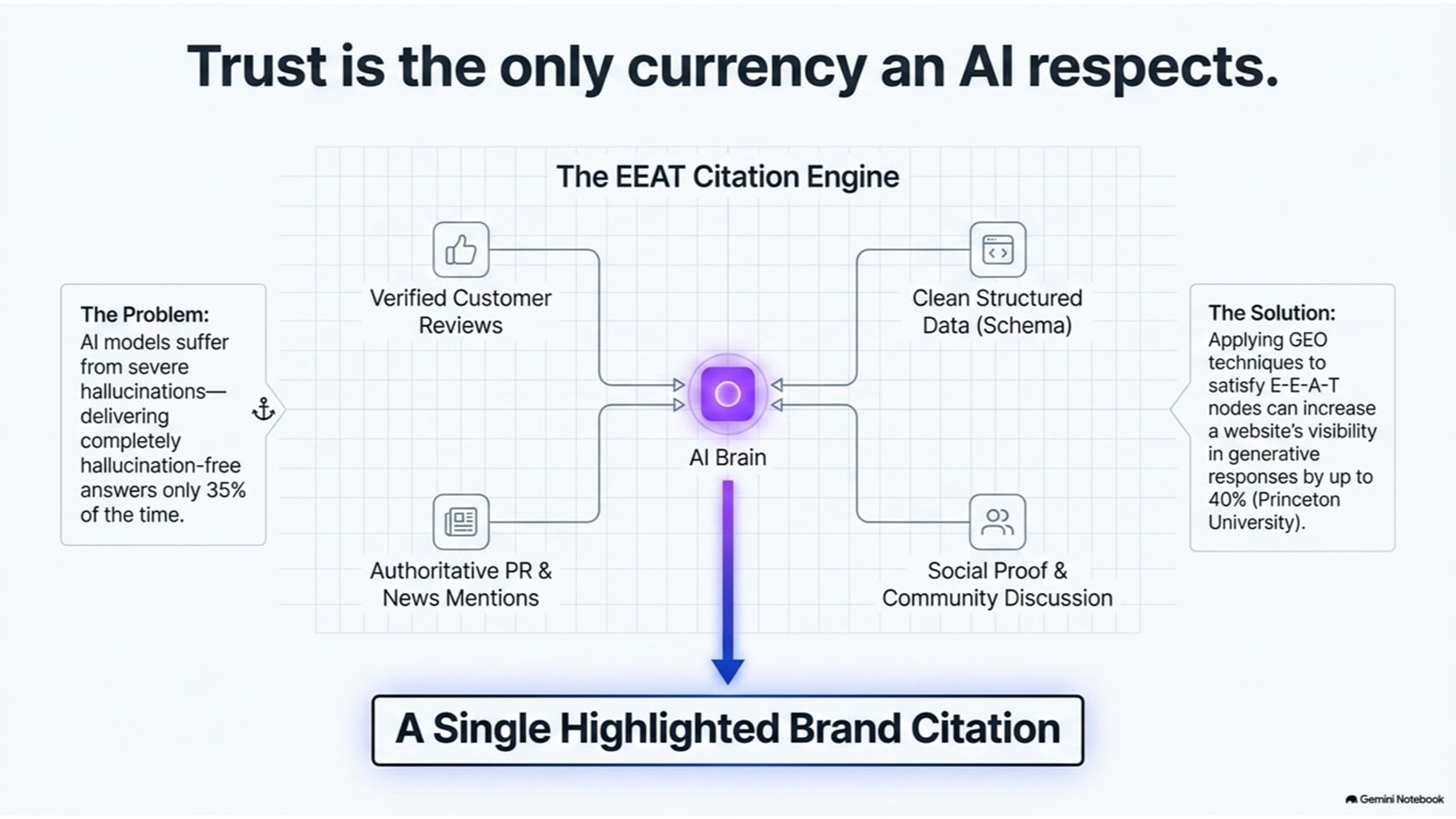
- Strong E-E-A-T signals – genuine Experience, Expertise, Authoritativeness, and Trust – are increasingly what separates cited sources from ignored ones in AI-generated responses.
- Measuring brand visibility in AI answers, not just organic traffic, is now a business-critical metric for digital marketers.
- Winning in this new landscape means building content that anticipates follow-up questions and covers full topic landscapes – something agencies like West Pro Media Services help brands execute through strategic multicasting.
Search has quietly changed its rules – and most marketing teams are still playing by the old ones. The shift runs deeper than cosmetic updates. What happens behind the scenes when someone types a query into Google’s AI Mode is fundamentally different from what happened even two years ago. Understanding that hidden mechanism is now the difference between being cited and being invisible.
Your #1 Ranking No Longer Guarantees AI Visibility
Here’s a scenario that’s becoming uncomfortably common: a marketing team checks their analytics, sees their product page sitting firmly at position #1 in Google’s traditional results, and feels confident. Then someone asks ChatGPT or Google’s AI Mode a question directly related to that product – and their brand doesn’t appear anywhere in the answer.
This reflects a structural shift in how AI-powered search works. Traditional rankings are earned through one set of signals. AI-generated answers are built through a completely different process – one that rewards topic depth, verifiable expertise, and broad coverage over any single page’s keyword optimization. The #1 spot is still worth having, but it no longer carries the weight it once did when AI is doing the answering.
What Query Fan-Out Actually Does
Query fan-out is the engine running underneath modern AI search. When a user submits a prompt to an AI search platform, the system doesn’t just look for pages that match those words. Instead, it automatically expands that single query into a cluster of related sub-queries – each targeting a different angle, interpretation, or dimension of the original question. The result is a far more thorough search sweep than any user could manually perform, all happening invisibly in fractions of a second.
One Prompt, Many Hidden Sub-Queries (8-12 Is Just One Estimate)
The fan-out process is typically estimated to generate somewhere between 8 and 12 parallel sub-queries from a single user prompt, though the actual number varies by query complexity and platform behavior. For a question like “What’s the best project management software for a remote agency?” the system might simultaneously search for pricing comparisons, integration capabilities, user reviews, onboarding difficulty, team size recommendations, security compliance, and real-world case studies – all at once, all from that one prompt.
This parallel retrieval is what makes AI answers feel surprisingly thorough. The synthesis that follows stitches those results into one coherent response – but the sourcing process beneath it is anything but singular.
How Analysis, Decomposition, and Synthesis Work Together
The fan-out process follows a consistent pattern. First, the system analyzes intent – what is the user actually trying to accomplish? Next comes decomposition, breaking the query into logical sub-topics. Then simultaneous retrieval fires those sub-queries across multiple data sources. Finally, synthesis assembles the retrieved fragments into a single, readable answer. Each stage filters for relevance, credibility, and specificity. Content that addresses only the surface-level query – without covering adjacent concerns – gets passed over in favor of sources that speak to multiple dimensions of the topic at once.
Google’s AI Mode Is Already Running This Playbook
Google’s AI Mode, which began rolling out in the US in May 2025 and expanded to over 200 countries and territories by October 2025, is the clearest public example of query fan-out in action. It was built for longer, more nuanced questions – and the behavioral data backs that up. Google reported that early AI Mode testers were submitting queries two to three times the length of traditional searches, and by October, queries were running almost three times longer than conventional search inputs. AI Mode rewards richer, more conversational prompts with richer answers – and the query fan-out mechanism is what makes that possible at scale.
Gemini 2.5 Powers the Fan-Out Engine
Underneath AI Mode sits Gemini 2.5, Google’s advanced reasoning model. Gemini 2.5 handles the decomposition and synthesis stages of the fan-out process, enabling the system to break complex, multi-part questions into structured sub-queries and then weave the results into a coherent, grounded response. The sophistication of this model is why AI Mode handles ambiguous or layered questions so differently from a traditional keyword-based results page.
Visual Fan-Out: When an Image Becomes Multiple Searches
Query fan-out extends beyond text. Google AI Mode now incorporates what it calls Visual Fan-Out – where an uploaded image is treated as a scene rather than a file. The system detects objects and attributes within that image, decomposes the user’s intent, and fires multiple parallel visual searches to produce grounded results. Google Lens already reaches more than 1.5 billion users per month, so this is far from a niche capability. For product-led brands, retailers, and visual-heavy industries, it’s a growing discovery channel that demands attention to image quality, accuracy, and descriptive context.
Why Traditional SEO Falls Short
Traditional SEO was built around a fundamentally different model: optimize a page for a specific keyword, earn a high ranking, capture clicks. That model made sense when search was a retrieval system. Now that search is an answer-generation system, the rules have shifted beneath that old playbook.
Ranking for One Keyword vs. Owning a Topic Landscape
When a single user query spawns 8-12 sub-queries, a page optimized for one keyword can only win on one of those sub-queries at best. The AI system pulls from whichever sources best address each sub-topic – meaning a competitor with several solid, relevant pages covering adjacent angles can appear in the synthesized answer even if none of those pages rank #1 for the main keyword. Owning a topic landscape – covering the main query and the surrounding questions, concerns, and decision points – is what positions a brand for citation. Ranking for a single keyword, without that surrounding depth, increasingly leaves significant visibility on the table.
What AI Systems Actually Reward
Content That Anticipates Follow-Up Questions
AI systems favor sources that answer not just the prompt, but the questions the user would logically ask next. For a B2B SaaS brand, that means a content library covering implementation, pricing transparency, integration options, security considerations, and ROI evidence – not just a product overview page. Content that maps to the full decision journey creates more surface area for citation across multiple sub-queries in the fan-out process.
E-E-A-T as a Trust Signal, Not a Ranking Checkbox
Google’s E-E-A-T framework – Experience, Expertise, Authoritativeness, and Trust – is frequently misunderstood as a direct ranking factor. Google itself has clarified that E-E-A-T is not a single scoring metric. What it represents is a cluster of signals that help search systems identify genuinely credible content. Named authors with substantive bios, primary research, cited sources with dates and scope, and transparent editorial standards all contribute to this trust picture. In AI-mediated search, these signals matter because they make content easier to verify and, therefore, safer for AI systems to cite.
B2B Buying Journeys: Fan-Out Mirrors Committee-Style Research
Query fan-out has particular implications for B2B marketers. Enterprise buying decisions rarely involve a single decision-maker asking a single question. They involve committees with different priorities – finance, IT, operations, compliance. A single AI-generated answer about a B2B solution can now surface pricing, integration requirements, compliance considerations, and ROI evidence simultaneously, because the fan-out mechanism mirrors that multi-stakeholder research process. Brands whose content addresses all of those dimensions have a structural advantage in being synthesized into that answer.
Generative Engine Optimization: The Practical Shift
Generative Engine Optimization (GEO) is the practical discipline of adapting content strategy to perform inside AI-generated answers, not just traditional rankings. It builds on SEO fundamentals rather than replacing them – Google’s own 2026 guidance explicitly reaffirms that core SEO practices remain foundational to appearing in generative search features.
Audience-Question Maps Over Keyword Lists
Effective GEO strategy builds around audience-question maps – structured inventories of every question a buyer might ask at each stage of their journey. This approach naturally produces the topical depth that query fan-out rewards, because it generates content across the full range of sub-topics the fan-out mechanism will probe.
Creating Content AI Cannot Cheaply Recreate
The strategic vulnerability of generic content is real. If a page can be produced by summarizing the first page of Google results – with no original reporting, no first-hand experience, and no proprietary data – it’s easily replaced by an AI summary. The content that retains value is the content AI cannot replicate cheaply: original survey data, first-hand case studies with real outcomes, expert interviews, practitioner frameworks, and tools like calculators or diagnostic assessments. This is where the competitive moat exists in an AI-saturated content environment.
Measure Visibility, Not Just Traffic
Organic sessions remain a relevant metric, but they’re no longer sufficient on their own. AI answers can raise brand awareness without generating an immediate click – and the commercial value of that awareness depends on what happens downstream. A more complete measurement framework tracks brand and non-brand impressions, AI Overview and AI Mode presence for strategically important queries, share of voice across category and comparison prompts, assisted conversions, branded search growth, and referral traffic from AI platforms. The goal is to distinguish between content that drives clicks and content that drives influence – because in AI-mediated search, both matter.
Expertise AI Can Cite Beats Content AI Can Summarize
The brands that will perform best in an AI-mediated search environment aren’t necessarily the ones publishing the most. They’re the ones whose expertise is easiest to trust, retrieve, verify, and act on. Real customer outcomes, named specialists, primary research, independent editorial coverage, and consistent entity signals across the web – these are harder to imitate than keyword-optimized copy, and they’re exactly what AI systems are built to surface. The competitive advantage has shifted from publishing volume to publishing authority.
To learn more about how West Pro Media Services helps brands build and distribute content that earns visibility across AI and traditional search surfaces, visit their website.
West Pro Media Services Ltd
phil@westpromediaservices.com
+44 161 3990375
42 Wayfaring
Westhoughton
Bolton
Greater Manchester
BL5 3UT
United Kingdom


