
Recreation Facilities Seek Alternatives to Infilled Turf as Sustainability and Maintenance Pressures Grow
PR Newswire
SAN DIEGO, Sept. 17, 2026
SAN DIEGO, Sept. 17, 2026 /PRNewswire/ — As universities and recreation operators face increasing pressure to reduce maintenance demands, improve sustainability outcomes, and rethink long-term field management strategies, a new generation of synthetic turf systems is beginning to reshape how athletic and recreation fields are designed. Among the most significant shifts is the move away from traditional infill-dependent turf systems toward surfaces that eliminate the need for performance infill altogether.
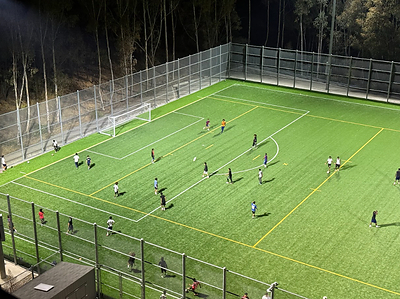
For highly utilized recreation and intramural fields, maintaining traditional synthetic turf systems can present ongoing operational challenges. Infill displacement from heavy use often requires regular redistribution and replenishment to maintain consistent playing conditions. At the same time, institutions with sustainability goals are increasingly evaluating the environmental profile of field surfaces throughout their lifecycle, from manufacturing through end-of-life recovery.
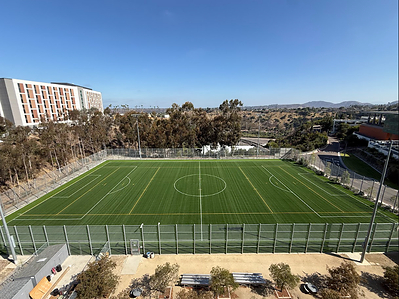
That combination of operational and environmental considerations informed Associated Students (A.S.) at San Diego State University‘s decision to replace an existing traditional infilled synthetic turf field with Pivot® Performance Turf by TenCate, which does not require traditional infill such as sand or black crumb rubber. The field serves as a heavily used space within A.S.’ Aztec Recreation Department for sport club and intramural programs, making durability, field availability, and maintenance requirements key factors in the evaluation process.
Unlike conventional synthetic turf systems that rely on rubber or sand infill to deliver performance characteristics, Pivot is engineered to perform without performance infill. The system’s fiber and backing design are intended to create playing characteristics traditionally achieved through infill, while eliminating the ongoing management requirements associated with infill migration and replenishment. By removing performance infill from the equation, the system represents a different approach to synthetic turf design, one focused on simplifying maintenance while maintaining field usability across high-traffic applications.
For A.S., the selection also aligned with broader sustainability objectives. In addition to reducing operational maintenance requirements, the organization sought a turf system manufactured without added PFAS and primary microplastics, while providing a pathway for recycling at the end of the field’s service life. These considerations increasingly factor into procurement decisions as colleges and universities evaluate the environmental impacts of campus infrastructure investments.
The result is a recreation field designed to support continuous use by campus organizations while reducing the maintenance demands traditionally associated with infilled synthetic turf. The installation reflects a broader trend among facility operators seeking solutions that balance field availability, operational efficiency, and sustainability objectives.
“Sustainability is a core value for A.S., and it was an important consideration throughout this project,” said Reginald Cabanilla, A.S. Director of Facilities and Sustainability. “Pivot offered an opportunity to reduce dependence on traditional infill materials while supporting our environmental goals. The system’s design, including its approach to PFAS, primary microplastics, and end-of-life recyclability, aligned with our commitment to making thoughtful, long-term investments in campus infrastructure.”
As facility operators continue to evaluate alternatives to traditional synthetic turf construction, infill-free systems such as Pivot are emerging as a distinct category within the market, reflecting changing priorities around maintenance, sustainability, and lifecycle management.
Contact:
Erica Rumpke
e.rumpke@tencategrass.com
513-484-6795
About TenCate
TenCate develops high-performance solutions for sports, play, recreation and outdoor living. Combining more than 300 years of textile expertise with advanced material science, biomechanics and engineering, the company develops, manufactures, installs and maintains artificial turf systems, hybrid grass systems, running tracks and sports lighting for every level of sport, from local communities and grassroots clubs to elite sports organizations worldwide. Operating in more than 60 countries with nearly 5,000 employees, TenCate combines global expertise with local delivery. Research at the Center for Turf Innovation (CTI) drives continuous innovation, helping improve performance, maximize availability and advance circularity by design.
For more information, visit www.tencategrass.us.
 View original content to download multimedia:https://www.prnewswire.com/news-releases/recreation-facilities-seek-alternatives-to-infilled-turf-as-sustainability-and-maintenance-pressures-grow-302881542.html
SOURCE TenCate Grass Americas


