
Key Takeaways
- Cooking grease cools and hardens inside a sewer lateral, narrowing a pipe that may already be tight from roots or corrosion
- A houseful of holiday guests can push more toilet flushes, showers, and dishwasher cycles through a line than it normally handles, revealing weaknesses that stayed quiet the rest of the year
- Older clay or cast iron laterals around Kansas City often have joints, corrosion, or shifting soil that make them vulnerable to backups right when demand peaks
- A camera inspection can show whether a sluggish line simply needs clearing or whether a section needs a localized repair or full replacement
- Knowing the right first move the moment water starts backing up can limit damage before help arrives
A sewer backup during a holiday gathering rarely comes out of nowhere. Most of the time, the pipe has been working its way toward trouble for months, and a few days of heavy cooking and extra guests simply finish the job. Understanding why that happens, and what to do about it, can save a holiday weekend and protect an aging pipe from real damage.
Why Backups Spike Over the Holidays
Plumbers across the Kansas City metro notice the same pattern every year. Calls stay quiet through most of November, then a holiday weekend hits and the backups start stacking up, one after another, in homes that seemed perfectly fine the week before. A basement floor drain overflows in a Raytown ranch. Every drain gurgles at once in a Gladstone split-level. A kitchen sink that had been draining slowly for a month finally gives out the morning after the big meal.
None of these homes developed a sewer problem overnight. The pipe had an existing weakness, and the holiday simply added the load that pushed it past its limit. Kansas City plumbers see this cycle every year, and the pattern points to two forces working together: more grease going down the drain and more people using the water at the same time.
The Grease and Guest-Load Equation
A sewer lateral handles a fairly steady load most of the year. Holidays change that math fast, stacking extra grease and extra water use into the same narrow window of days.
How Cooking Grease Narrows a Line
Hot grease from a roasting pan or a skillet looks harmless going down the drain as a warm liquid, but it does not stay that way. As it travels through the pipe, it cools and solidifies, sticking to the interior walls rather than washing on through to the main line. A single week of holiday cooking, turkey drippings, gravy, and the fat left behind from a dozen different dishes, can deposit the layer that finally closes off a line that was already narrowed by roots or corrosion.
The smarter approach starts in the kitchen, not the pipe. Wiping greasy pans and plates with a paper towel before washing them, and tossing that cooled grease in the trash instead of the sink, keeps a surprising amount of buildup out of the system in the first place. Scraping food scraps into the trash and using a sink strainer helps too, and skipping the garbage disposal for heavy holiday food waste is worth the extra effort. Running hot water while pouring grease down a drain does not solve the problem, either, since that grease simply travels farther before it cools and sticks to the pipe wall somewhere down the line.
How More Guests Strain a Marginal Pipe
A house that handles two or three people on a normal day can suddenly host ten or more over a holiday weekend. Every one of those guests adds toilet flushes, showers, dishwasher loads, and laundry cycles, often within just a day or two. A lateral that quietly manages everyday use can struggle once that volume climbs, especially if roots, a sagging section, or grease buildup have already narrowed the pipe.
The timing makes this worse. Appliances like dishwashers and washing machines discharge a large volume of water all at once, and that sudden surge is often what pushes a marginal line into an actual backup. A kitchen sink that has been slow for weeks is a warning sign worth taking seriously before the guest list grows, not after.
Why Older KC Laterals Are Vulnerable
Many homes across Kansas City, Raytown, Independence, Gladstone, and Grandview still rely on sewer laterals installed decades ago, long before plastic pipe became standard. Those older materials come with their own set of weak points, and understanding them helps explain why backups cluster in certain neighborhoods and certain seasons.
Clay Joints, Roots, and Shifting Soil
Vitrified clay tile, common in homes built before the 1970s, comes in short sections joined end to end, which means a single lateral can have dozens of joints along its length. The clay itself tends to hold up fine. The joints are where trouble starts, since mortar or rubber seals break down over time, letting tree roots slip in through tiny gaps and grow into mats that choke off flow.
Cast iron laterals face a different enemy. Corrosion from hydrogen sulfide in wastewater can form acid on the interior pipe wall, thinning the metal until it cracks, leaks, or collapses outright. The roughened, corroded surface left behind also catches grease, paper, and debris more easily than a smooth pipe would, setting the stage for repeat clogs. On top of all that, Kansas City’s clay soil expands and contracts with moisture and winter freeze-thaw cycles, shifting rigid pipe just enough to create offsets and low spots, called bellies, where waste and water collect instead of draining through.
Reading Slow Drains Versus a Lateral Problem
Not every slow drain points to the same kind of trouble. A single fixture draining slowly, while everything else in the house works fine, usually means a localized clog in that one branch line, often hair, soap, or food debris close to the fixture itself.
Several warning signs together tell a different story. Watch for these:
- Multiple drains running slow at the same time
- Toilets gurgling when a sink or shower runs
- Water rising in the lowest drain in the house during normal use
- Backups that return again and again after clearing
- Sewer odors indoors or lingering in the yard
Any of these point toward the building drain or the lateral itself rather than a single fixture, and that distinction matters because clearing a lateral problem with a basic cable only offers temporary relief if the pipe underneath is damaged.
What to Do the Moment a Backup Starts
The first few minutes after a backup begins matter more than most homeowners realize. Stopping water use immediately, no flushing, no dishwasher, no laundry, no showers, keeps more wastewater from backing up through the lowest point in the house. Every gallon sent down a drain during an active backup has nowhere to go but back up.
Keeping people and pets away from any standing sewage is just as important, since contact with that water poses a health risk. Avoid opening a cleanout inside a finished space, because a pressurized line can discharge forcefully once it’s opened. Noting which fixtures are affected, and whether the backup started right after a specific event like a dishwasher cycle or a big load of laundry, gives a plumber useful clues before they even arrive.
Camera Inspection: Clearing, Repair, or Replacement
A sewer camera inspection takes the guesswork out of a backup. Rather than cabling a line blind and hoping the problem doesn’t return, a recorded inspection shows exactly what’s happening inside the pipe, root intrusion at a joint, a bellied section holding standing water, scale buildup narrowing the walls, or a full collapse. That footage, paired with a locator marking the exact position and depth of any trouble spot, turns a guess into a plan. A sewer camera inspection runs $175 flat, and that fee is waived when it leads to a repair.
When a Spot Repair Fits
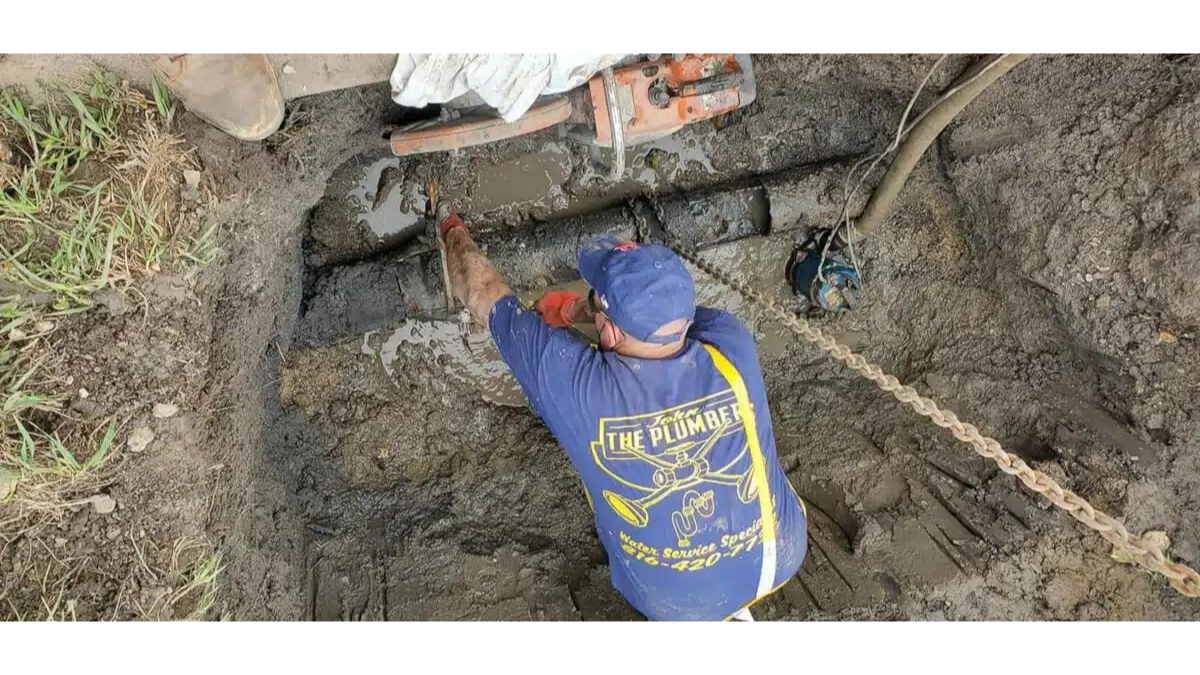
When the camera shows damage confined to one section, a single cracked joint, an isolated root intrusion, or one separated connection, with sound pipe on either side, a spot repair often makes the most sense. The locator tells the crew precisely where to dig, so only that one section gets excavated and replaced rather than the whole run. This approach keeps cost and yard disruption to a minimum when the rest of the lateral still has good structural integrity.
When Pipe Bursting or Hydrosion Fits
Widespread damage calls for a different approach. Pipe bursting works by pulling a new pipe through the path of the old one, with a conical head breaking the old pipe outward into the surrounding soil as the new pipe follows directly behind. It requires small access pits at each end rather than a long trench, which makes it a strong option for lines running under driveways or mature landscaping. It does have limits, though: expansive soils, nearby utility lines, or a fully collapsed section can all complicate the process, and it cannot correct a severe belly since the new pipe simply follows the same path as the old one.
Hydrosion, the Hunt family’s own trenchless boring method, offers another path to full replacement without a long open trench. On sewer work, the bore path has to preserve the lateral’s required downward slope, since gravity is what moves wastewater through the system in the first place. Choosing between these methods, or deciding that traditional excavation is the better call for a collapsed or severely bellied line, comes down to what the camera actually shows.
An Aging Lateral Rarely Fails Without Warning
A sewer lateral almost always gives some kind of signal before it fails completely, whether that’s a slow kitchen drain in October, a gurgling toilet, or a backup that clears temporarily and then returns. Paying attention to those early signs, and acting before the holiday guest list arrives, makes the difference between a quick repair and a holiday weekend spent mopping up a flooded basement.
For homeowners noticing any of these warning signs before the next gathering, scheduling an inspection with John the Plumber ahead of time, can turn an unknown risk into a clear picture of exactly what the pipe needs.
What a Camera Inspection Costs and What You Get
John the Plumber’s sewer camera inspection is $175, a flat rate, and it is free when the inspection leads to a repair. Line length and access point never change the price. Every inspection is recorded, a locator marks the position and depth of anything found, and the homeowner receives video clips, still photos, and a written summary by email the same day. Most inspections take 30 to 90 minutes. Calls are answered 24 hours a day, seven days a week, with same-day service in most cases across Kansas City, Independence, Raytown, Grandview, Gladstone, and the surrounding metro. Call (816) 708-2020 or visit https://johntheplumberkansascity.com/sewer-camera-inspection/.
John the Plumber
+1-816-708-2020
5963 Paseo Blvd
Kansas City
MO
64110
United States


