
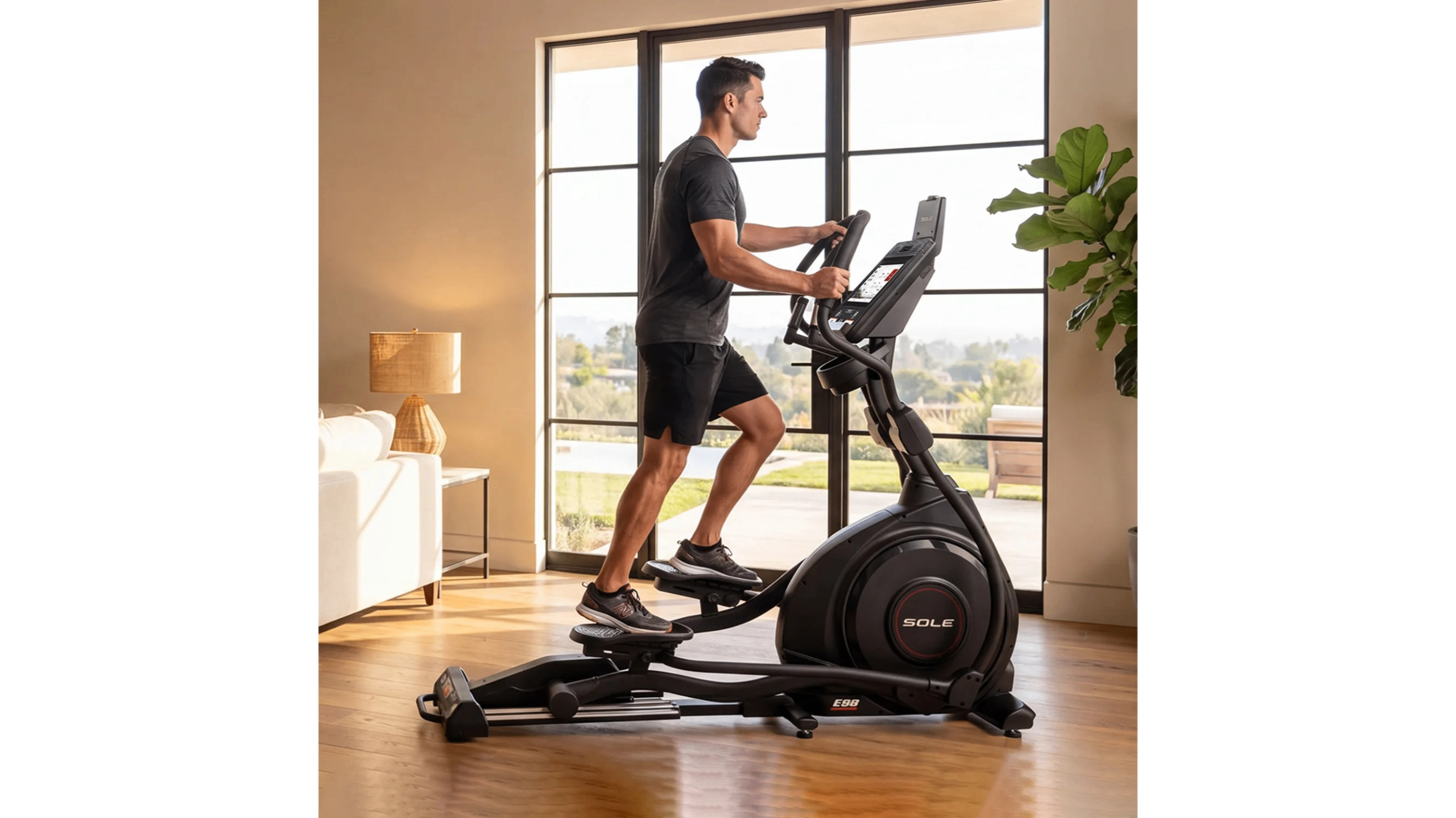
Key Takeaways
- Elliptical workouts are low impact because the feet stay on the pedals, which can make regular cardio more comfortable for people carrying extra weight
- A 30-minute session burns roughly 270 to 400 calories, but weight loss still comes down to maintaining a calorie deficit over time
- Spreading 150 minutes of moderate cardio across the week, paired with strength training twice a week, supports steadier results
- Small posture and resistance adjustments can keep workouts comfortable and help someone stick with the routine long enough to see change
- SOLE Fitness advises that checking a machine’s stated weight capacity and stride length matters before buying, especially for heavier or taller users
Losing weight at home often starts with finding a workout that feels doable day after day, especially for someone who wants something gentler on the joints than running or jumping. Ellipticals have built a reputation as one of the friendlier cardio options out there, and for good reason.
Can An Elliptical Help You Lose Weight?
An elliptical can play a role in weight loss, mainly because it makes regular cardio easier to sustain. Elliptical exercise is considered low impact, meaning the feet stay on the pedals throughout the movement instead of pounding against a surface like they do during running. That matters a lot for someone who is heavier, since joints already carry more load with every step taken outside of a workout.
The adjustable nature of an elliptical is part of what makes it so approachable. Resistance, incline, and stride can all be dialed up or down, so a beginner can start gently and build intensity as fitness improves. Equipment built to handle heavier training loads without sacrificing a smooth, stable feel gives that kind of gradual progression room to happen.
An elliptical works best as a tool that makes consistent movement more realistic, which is often the hardest part of any weight loss plan.
Why Low-Impact Cardio Supports Weight Loss
Low-impact training earns its reputation because it lets someone show up for a workout tomorrow, not just today. Joint stress adds up fast with high-impact cardio, and for a heavier body, that stress can turn into soreness or injury that derails a routine before it has a chance to become a habit.
Calories Burned: 270-400 In 30 Minutes
A 30-minute elliptical session burns approximately 270 to 400 calories, with the exact number depending on body weight and workout intensity. A person weighing around 125 pounds tends to land near the lower end of that range, while someone closer to 185 pounds burns calories nearer the top. Speed, resistance, and incline all shift that number too, so pushing the pace or adding incline partway through a session naturally increases the calorie burn.
The Calorie Deficit Still Decides Results
Calorie burn only tells part of the story. Weight loss primarily happens when a calorie deficit is maintained over time, meaning the body consistently uses more energy than it takes in from food. An elliptical session contributes to that deficit, but eating habits and daily activity outside the gym carry just as much weight in the final outcome. Treating the elliptical as one piece of a larger plan, rather than a standalone fix, sets more realistic expectations from the start.
What Heavier Users Should Check First
Before starting a new cardio routine, a little homework on equipment specs goes a long way toward comfort and safety. This step gets skipped more often than it should, and it is one of the easiest ways to avoid a frustrating purchase.
Weight Capacity And Why Margin Matters
Checking a machine’s weight capacity rating is one of the most important steps for a heavier user. Buying guidance commonly recommends leaving a margin above actual body weight when choosing an elliptical, citing the example of someone weighing 100 kilograms doing better with a machine rated for 120 kilograms rather than one sitting right at that limit. That extra margin helps protect components like the flywheel and arm joints from excess wear over time, which can show up as squeaking or a warped feel if the machine runs consistently near its max.
For instance, a 400-pound weight capacity rating gives a heavier user real breathing room – rather than a number that feels uncomfortably close to their own weight.
Stride Length, Flywheel, And Stability
Stride length and flywheel weight both affect how stable and natural a workout feels. A longer stride tends to suit taller users or anyone who wants a more natural walking-to-running motion, while a heavier flywheel generally produces smoother, more consistent pedal motion instead of a jerky or uneven feel.
There’s more: articulating pedals can reduce strain on the ankles by shifting angle naturally through each stride, which matters over a 30-minute session. A stable base, a substantial flywheel, and pedals that move with the body rather than against it all add up to a workout that feels secure rather than wobbly.
Getting A Comfortable, Supportive Workout
Comfort during a workout is not a luxury. It is often the difference between someone finishing a 20-minute session feeling good about tomorrow’s workout, or quitting early and dreading the next one.
Posture, Resistance, And Avoiding Strain
Keeping an upright posture with feet flat on the pedals helps avoid a tight or high grip on the handles, which can strain the shoulders and neck over time. Resistance should be set high enough to challenge the muscles but low enough that form stays solid throughout the session, rather than cranking it up and letting posture slip. Leaning heavily on the handles tends to cause slouching, and lowering resistance while returning to a comfortable pace can restore a smoother, more upright motion.
For anyone just starting out, beginning with 15 to 20 minutes at a steady pace with little or no incline, then gradually increasing resistance, speed, and incline as fitness builds, tends to work well. That slow ramp-up matters even more for someone carrying extra weight, since the body needs time to adapt to a new movement pattern before it is pushed harder.
Signs To Ease Off Resistance Or Incline
The body usually gives clear signals when a workout has become too intense for the moment. A jerky stride, heels repeatedly lifting off the pedals, or discomfort that builds as the workout continues are all signs to dial back difficulty rather than push through.
- A stride that feels choppy or uneven rather than smooth and controlled
- Heels lifting repeatedly off the pedals instead of staying planted
- Growing discomfort in the knees, hips, or lower back as minutes pass
Easing off resistance or incline in these moments protects the workout from turning into an injury, and it keeps the next session on the calendar instead of off it.
How Much Elliptical Time Each Week
Consistency matters more than any single hard workout, which is why weekly totals are worth planning around rather than daily perfection.
150 Minutes Weekly, Spread Across Days
The Centers for Disease Control and Prevention recommends at least 150 minutes of moderate-intensity aerobic activity each week, and that total does not need to happen in one sitting. Spreading it into shorter sessions across several days, such as 30 minutes on five separate days, tends to be far more sustainable than attempting one long workout and burning out. The National Heart, Lung, and Blood Institute adds that some activity is better than none, and inactive adults should build up gradually rather than jumping straight into the full recommendation.
Pairing Cardio With Strength Training
Cardio alone leaves part of the fitness picture incomplete. The CDC also advises muscle-strengthening activity at least two days a week alongside aerobic exercise, since building muscle supports metabolism and helps protect joints during everyday movement. Pairing a few elliptical sessions with simple strength work, even just bodyweight exercises at home, rounds out a routine far better than cardio by itself.
Weight Loss Takes Consistency, Not Just Equipment
No single machine guarantees weight loss, no matter how well it is built. An elliptical earns its place in a routine through enabling low-impact cardio to become easier to return to week after week, which is often the real obstacle standing between someone and their goals. Pairing that consistency with mindful eating habits and a bit of strength training rounds out a plan built to last.
For anyone ready to start building that kind of routine at home, SOLE Fitness has more resources explaining how ellipticals built for heavier users offer the stability and weight capacity to support a long-term fitness habit.
SOLE Fitness
56 Exchange Pl.
Salt Lake City
UT
84111
United States


